


Filter coffee is a very popular drink around the world, not only in the United States, Japan, and Northern Europe, as many people might think. Today, filter coffee is found not only on coffee shop and café menus, but also in the hospitality sector and working environments, from offices to co-working spaces.
Although filter coffee is almost always associated with manual preparation methods such as the V60, Chemex, or classic drip coffee makers, the professional sector is now focused on fully automatic filter coffee machines. These coffee machines offer the same quality as manual methods, but integrate consistent dispensing and an efficient work flow. In this article, we discover what filter coffee is, how it is prepared, which beans to use, and how it differs from espresso, with a particular focus on professional coffee machines for filter coffee, such as the Egro Touch Coffee.
What is filter coffee?
Filter coffee is also called drip coffee, but be careful not to confuse it with caffè americano. Filter coffee and caffè americano are two different drinks, not only due to the type of coffee and roast, but mainly in the way they are prepared. An americano is nothing more than an espresso mixed with hot water. It was created in Italy, the home of espresso, to meet the needs and satisfy the tastes of foreigners little accustomed to the classic tiny cups of espresso.

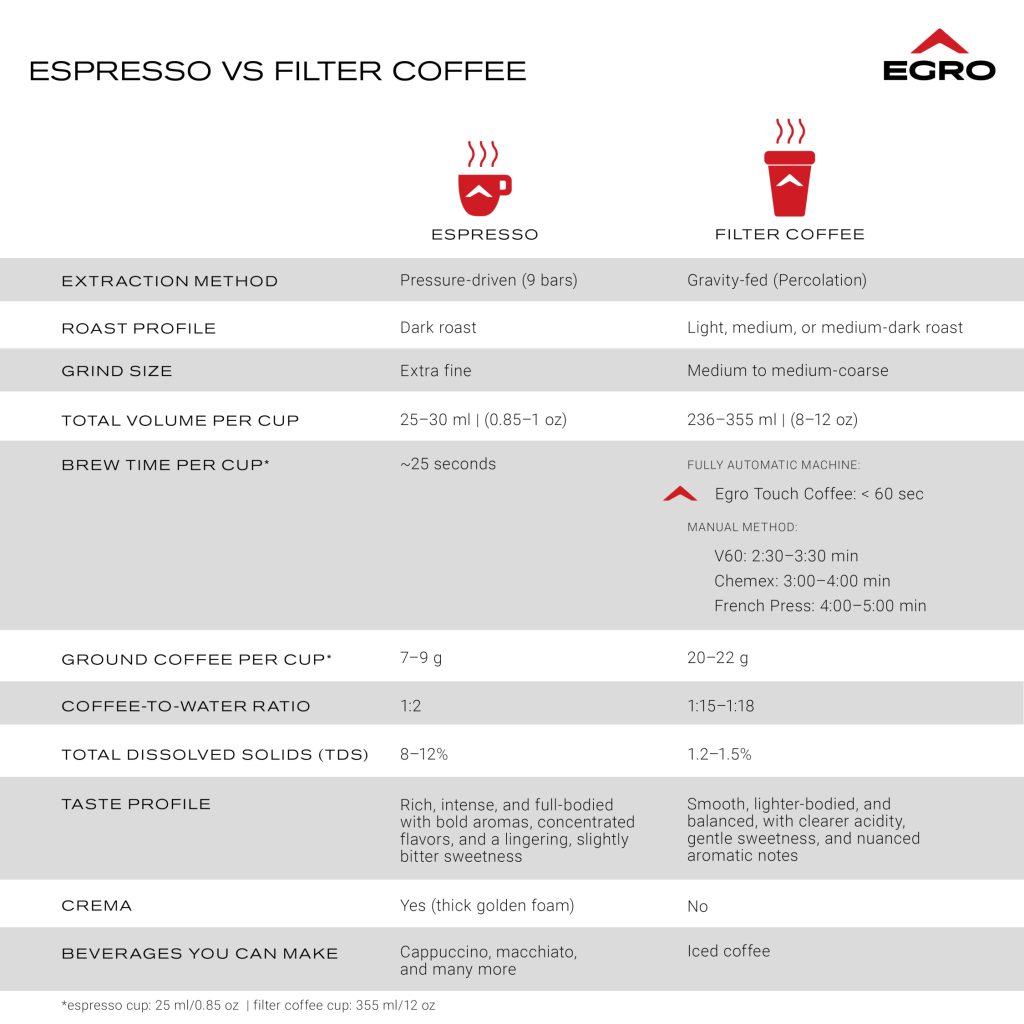
Filter coffee is prepared by pouring hot water over ground coffee, letting gravity rather than high pressure move the water through the grounds. This process generally requires a medium-coarse grind and a longer extraction time compared to the 25 canonical seconds necessary to prepare an espresso, yielding a drink that is smooth, soft, and rich in nuances. Free of pressure, the aromas develop in degrees, highlighting the lightest notes, which may be lost in a more aggressive, high-pressure extraction. The difference in preparing filter coffee and caffè americano is enormous, even if the final result may look the same to the untrained eye.
Filter coffee is one of the best extraction methods for respecting the original nature of the coffee bean. Percolating through the grounds, the water dissolves water-soluble substances, transferring them to the drink in the cup. This low-pressure percolation leads to a drink featuring great clarity, better aromatic definition, and a softer sensory structure. Technically speaking, filter coffee stands out for its ability to enhance volatile components and essential aromas, reducing the concentration of solids and maintaining a light but stable uniform body. Filter coffee also invites us to relax and taste it more slowly, stopping for a longer pause. It pairs well with food and is perfect during a meeting or morning of work. Espresso, on the other hand, is a short, intense ritual designed to strike the palate with greater body and persistence.
How to make filter coffee
The methods for preparing filter coffee can be divided into manual and automated. Manual preparation methods, such as the V60, Chemex, or French press, offer a high degree of control but also require manual abilities, technique, time, and attention to detail. With these methods, the barista controls every step, guided by art, experience, and dexterity.
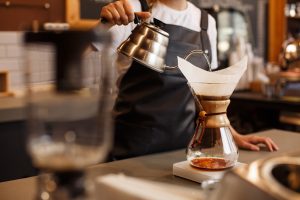
Although excellent, these extraction methods are not sustainable for most contemporary coffee businesses, where high volumes and operational continuity require precision and repeatable quality. They are also less suitable for businesses with high work flows, where quality and speed are essential. Manual methods are, however, much appreciated in businesses such as small coffee shops where the heart of the activity is customer service. A coffee break becomes a moment out of time to be enjoyed at leisure, and a cup of filter coffee expresses a sociable moment of pleasure and sharing. In different situations, such as businesses run by large café chains and even offices, the best way to guarantee quality is by using a fully automatic coffee machine. Fully automatic machines for filter coffee do not require the hands of an expert barista, but they do guarantee quality, repeatability, freshness, and efficiency on a large scale. Manual methods do not consistently offer all these qualities, and these are precisely the situations in which solutions such as Touch Coffee, the fully automatic machine for filter coffee by Egro, stand out.
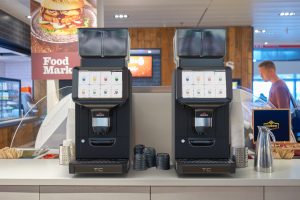
The ideal extraction process requires the balance of three key parameters: coffee grind, temperature, and contact time. Fully automatic machines for filter coffee, such as the Egro Touch Coffee, replicate the pour–over technique, maintaining all the parameters that are difficult to stabilise by hand and replicate constantly. Dispensing is based on predefined flow curves, precise temperature control, and uniform water distribution across the coffee puck.
With Egro fully automatic machines, all circuit cleaning operations can be managed directly from the touch screen. The main menu provides quick access to the settings for washing and rinsing the circuits. Passwords can be set for the various menus and submenus, allowing access only to certain authorised members of staff. Let’s take a detailed look at the main cleaning operations that should be programmed and carried out on the Egro fully automatic machine, differentiating daily operations from those to be completed at least once a week.

These professional machines grind and prepare each cup of coffee on demand, offering high-quality filter coffee without manual input from a professional barista. With respect to classic drip coffee makers, they ensure constant freshness.
The coffee is not prepared and then left on a warming plate in large 2- or 3-litre carafes until it is all used up. The fully automatic technology grinds the coffee beans just before extraction, without the need for an external coffee grinder. Each cup is prepared as it is ordered, and the coffee is always served at the best
temperature. The Egro Touch Coffee comes with an outlet on the left, so you can also prepare 1-litre carafes of filter coffee in a single cycle if necessary. It is the ideal solution for breakfast service in hotels or a meeting at the office.
Which coffee should you use for filter coffee?
In general, coffees that have naturally rich and smooth aromas, such as many Arabica varieties from countries like Ethiopia, Kenya, or Colombia, are the best choice for filter coffee. These coffees, such as single-origin and specialty coffees, have more developed fruity, floral, and citrus notes, so they are the best for preparing filter coffee. In addition to personal taste, choosing the best type of coffee for filter coffee also depends on other factors such as the roast and grind.
Filter coffee extraction benefits from beans with a light or medium-light roast, while espresso benefits from a dark roast, and sometimes even a double roast, which ensures greater solubility, body, and a better result in quick extractions and when combined with milk. A light roast preserves natural acidity and primary aromatic compounds, while emphasising acidity, a fruity taste, and floral notes, characteristics that stand out in slow extractions such as filter coffee.
Because filter coffee is very aromatic, it is always important to use lightly ground coffee beans. The grind, or the size of the ground particles of coffee, must be medium-coarse to allow the hot water to pass through the grounds. If we used very finely ground coffee as with espresso, the water would not wet the coffee evenly or pass through it in the right amount of time.
Why choose a fully automatic machine for filter coffee?
Devices for the preparation of filter coffee may work in very different ways depending on the technology. The fascination of manual methods such as the V60 or Chemex is undeniable. The barista’s art, gestures, manual flow control, and delicate extraction make each cup of filter coffee a unique experience. While excellent for households or coffee shops that have a more relaxed service model, manual methods are not a scalable solution for the professional sector. They require expert baristas, dedicated resources, continuous training, and constant attention to the process.
Operating costs, sustainability in the long term, and the need for repeatability in service quality make these methods incompatible with professional settings that manage a large, continuous number of customers. Whether it’s a busy coffee shop, a service station, a self-service area, or a hotel breakfast room, quality and dexterity must coexist with strict operating needs. Speed, consistency, labour costs, and waste reduction are just as important as the quality of the coffee in the cup. And quality, in turn, cannot depend on the barista on shift or the intensity of service. It must be programmable, constant, and independent of the worker.
As common as they are, the most widespread drip coffee makers do not guarantee either on-demand freshness or professional control of the extraction curve, and they require continuous management by the staff. In professional settings, quality cannot be sporadic; it must be repeatable and established beforehand. This is why more and more businesses are choosing fully automatic machines for drip coffee. These systems have revolutionised the preparation of filter coffee in the professional sector, combining the quality of manual preparation with technological precision and automated consistency.
A fully automatic machine grinds the coffee, doses it, and extracts each individual cup on demand, guaranteeing freshness, quality, repeatability, and continuity, even at the busiest times. Operational sustainability is also an added value and tangible advantage. On-demand dispensing reduces waste compared to carafe systems, guaranteeing more efficient use of the coffee beans. This translates into more stable costs, less waste, and higher perceived quality for customers. Fully automatic solutions also lead to a higher level of service even without specialised personnel, ensuring the same quality with each extraction and under any operating conditions. These features are precisely why the most advanced form of filter coffee lies in fully automatic machines, which prove to be a strategic choice for café chains, hotels, offices, and any activity in the hospitality sector.
All the benefits of the Egro Touch Coffee fully automatic machine for filter coffee
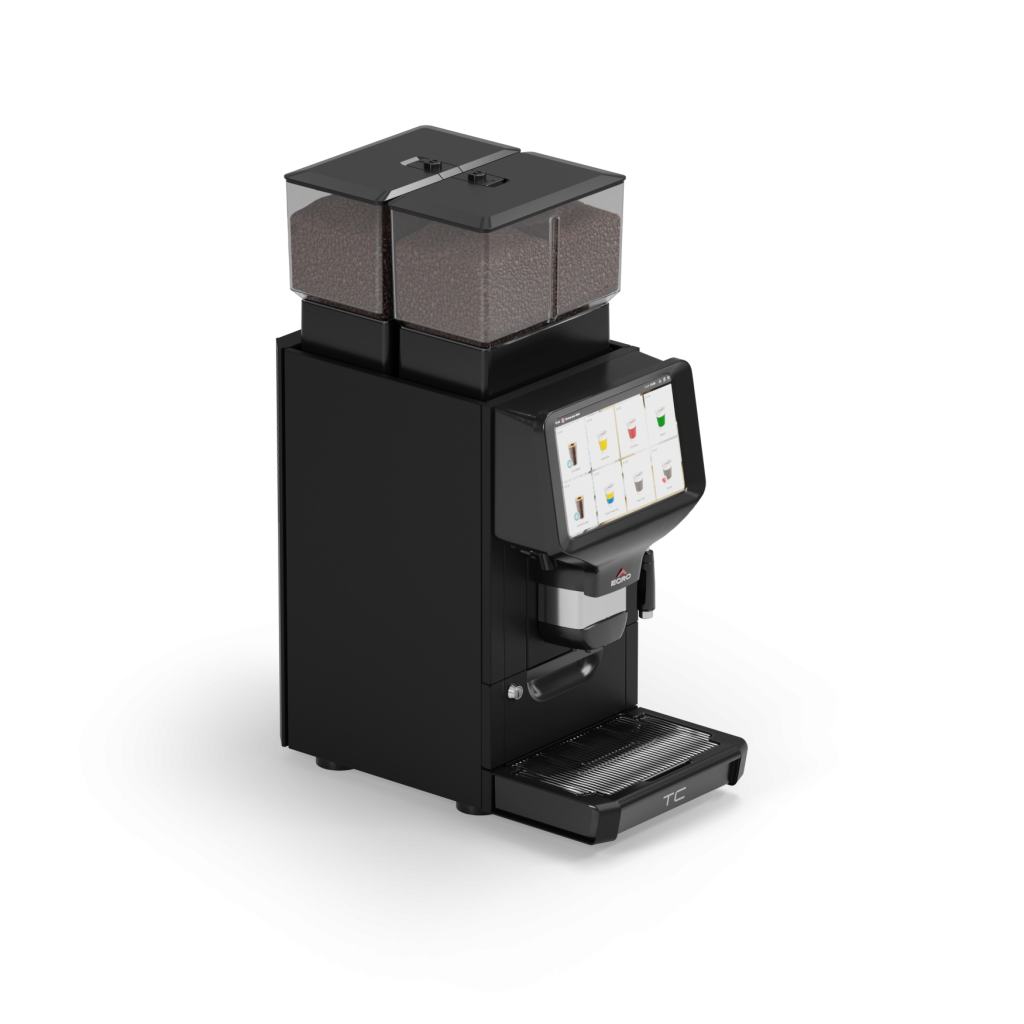
The Egro Touch Coffee is a fully automatic machine designed to prepare filter coffee. From grinding management to control of the extraction curve, each element is optimised to guarantee a constant, repeatable, high-quality result.
In contrast to manual systems or traditional filter coffee machines, Touch Coffee manages each step in the process automatically. It also offers all the features that make Egro products stand out on the market: integrated grinding with flat 54-mm stainless steel grinders and a 22-gram high-capacity dispensing chamber. The Egro Touch Coffee dispenses filter coffee in various formats, and even into a 1-litre carafe in a single cycle, without requiring time between one extraction and the next or wasting any coffee.
Now learn about all the features of the Egro Touch Coffee
For high-quality filter coffee that is always tasty.
With Egro Touch Coffee, you can prepare up to eighty 500-ml/16-oz cups of filter coffee in less than an hour. The four-hopper system lets you simultaneously offer different single-origin coffees or blends and create up to ten personalised blends by combining beans from different hoppers. All of this translates into more diverse menus, a greater choice for customers, and more ways to meet public tastes. Touch Coffee is also available in a version with integrated Coffee Cooler, a module designed to instantaneously cool coffee at the end of the extraction. This system is designed to prepare filter coffee served with ice cubes and works without an external refrigeration unit, positively impacting both energy savings and simplified installation.
In terms of user experience, Touch Coffee stands out for its 10” HD intuitive touchscreen interface, designed for both staff and customers using it in self-service mode. Navigating the various menus, selecting the drink and desired format, or starting extraction is quick and simple: a solid advantage in simplifying the task for users and increasing service fluidity at the busiest times.
The fully automatic machine integrates advanced functions for daily cleaning, such as automatic wash cycles, programmable rinses, and alert systems that remind workers when to perform ordinary maintenance (to learn more, read the article “Washing and Cleaning Egro Professional Coffee Machines”). These automatic features have two purposes: they contribute to lengthening the service life of the machine, maintaining dispensing quality; and they allow staff to dedicate more time to service and customer care.
Table of contents:
- Filter coffee: What is it, how do you prepare it, and how is it different from espresso?
- Making filter coffee: preparation methods
- Which coffee should you use for filter coffee?
- Why choose a fully automatic machine for filter coffee?
- All the benefits of the Egro Touch Coffee fully automatic machine for filter coffee